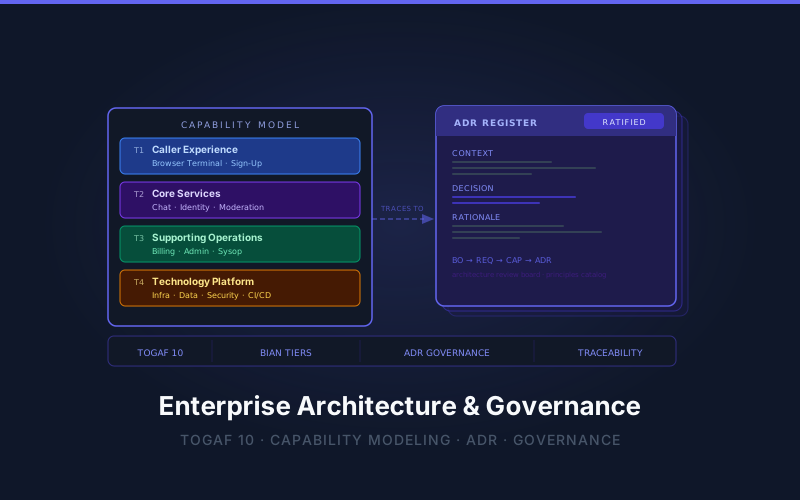
Technology decisions made without governance accumulate into architecture drift — systems that nobody fully understands, changes that carry hidden risk, and roadmaps that contradict each other. Enterprise architecture practice is how organizations maintain a clear, documented, and defensible picture of what they’ve built and why.
Lalee Innovations applies formal EA methodology at the scale each engagement actually needs — not ceremonial compliance theater, but the parts of the discipline that produce real clarity.
What’s Included#
Architecture Assessment & Documentation Current-state documentation of technology landscapes that have grown faster than their documentation. This includes system inventories, integration mapping, dependency analysis, and identification of undocumented decisions that are quietly governing production behavior.
TOGAF-Informed Governance Frameworks Architecture governance structures adapted for organization size: Architecture Review Board (ARB) charter design and process support, Architecture Decision Record (ADR) processes, principles catalogs, and the review workflows that make them stick without becoming bureaucracy.
Business Capability Modeling Structured decomposition of what the organization does — independent of how it currently does it. Capability models provide a stable reference frame for technology investment decisions, roadmap prioritization, and gap analysis. Tier structures adapted from BIAN conventions where appropriate.
Requirements Traceability Formal traceability from business objectives through requirements to capabilities and implementation decisions. Particularly valuable for regulated environments, audit-readiness, or projects where the rationale behind past decisions needs to be recoverable.
Target-State Architecture & Roadmapping Future-state capability analysis and roadmap development support: gap documentation, initiative sequencing, dependency mapping, and the architecture guardrail documentation that keeps execution aligned with intent.
Frameworks & Methods#
- TOGAF 10 (adapted, not blind compliance)
- BIAN (Banking Industry Architecture Network) tier conventions for capability modeling
- ADR format (Context / Decision / Rationale / Consequences / Risks / Compliance)
- Business Requirements / Functional Requirements / Non-Functional Requirements documentation
Methodology in Practice#
Formal EA methodology is not reserved for large enterprises. The Saimin 2 Chat System — a community BBS project — was designed entirely architecture-first before any application code was written. The contrast between the scale of the system and the rigor of its governance framework illustrates what the methodology looks like in practice:
Every significant decision is documented, recoverable, and auditable. The architecture documentation is published openly at saimin2.com/architecture/ as a working example of the methodology applied at community scale. The system is in production as a guest-open beta at chat.saimin2.com.